Loading...
Serving Chicopee, MA and surrounding areas. (413) 240-0179
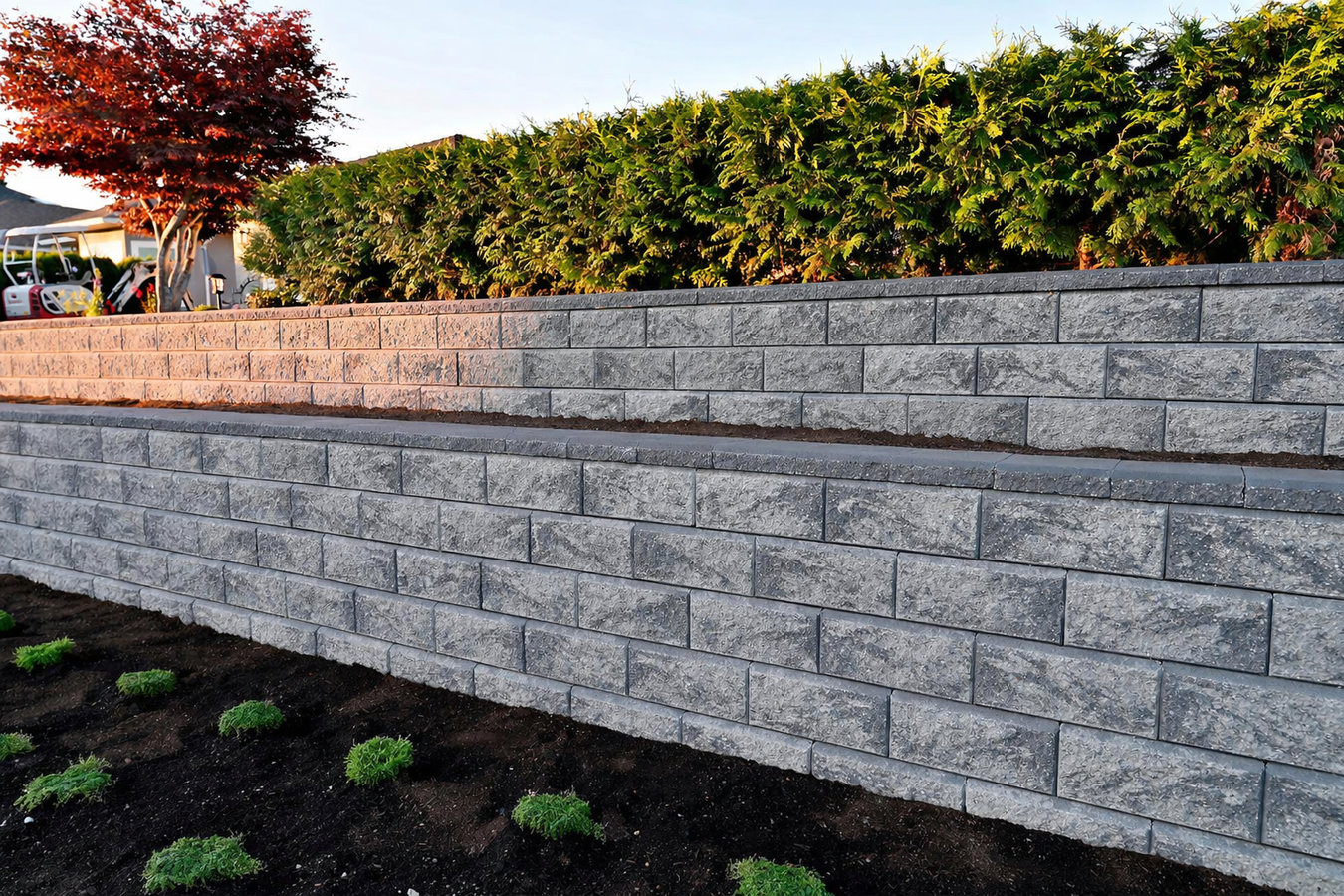
Watching your yard wash away every spring? We build concrete retaining walls with frost-depth footings and drainage that hold Chicopee slopes in place through mud season and hard winters.
Concrete retaining walls in Chicopee involve excavating below the frost line, pouring a footing at least four feet deep, building the wall with drainage gravel and outlet pipes behind it, and backfilling in compacted layers - most residential projects take two to five days of active work, with at least a week of curing before the area is loaded, whether the wall is poured concrete or a block retaining wall.
Most Chicopee homeowners reach out after watching a slope erode a little more each spring, or after noticing an older wall starting to lean. The Connecticut River valley clay soils here hold water instead of draining it, which puts constant pressure on any wall not designed with drainage in mind. If your home was built before 1970, any existing wall may never have had proper drainage behind it.
A well-designed retaining wall does more than stop erosion - it can create usable level yard space and support adjacent work like a new concrete floor installation or a patio at the grade below.
If you see bare dirt, exposed roots, or a growing gap between your lawn and a slope after rain, the yard is actively eroding. Chicopee's wet springs can accelerate this quickly once it starts. A retaining wall stops the movement before it reaches your foundation, driveway, or a neighbor's property.
A wall that tilts even slightly toward you is under more pressure than it can handle. Horizontal cracks near the base or a visible bow in the middle signal a failing structure. In Chicopee's older neighborhoods, many walls were built decades ago without proper drainage and are showing the results.
Standing water collecting at the bottom of a hill after a storm means the soil above is saturated and moving. This is especially common in Chicopee's clay-heavy soils, which drain slowly. Left alone, that saturated soil will eventually push whatever is holding it - or find a new path that damages your property.
Cracks in concrete near the edge of a slope - especially cracks that run parallel to the slope - often mean the soil underneath is shifting. A retaining wall addresses the root cause. Resurfacing the driveway without fixing the erosion underneath is a short-term fix that will cost you again in a few years.
We handle the full scope of concrete retaining wall work - from straightforward residential slope stabilization to larger commercial grade-change projects. Every wall starts with proper excavation and a footing poured below the four-foot frost line that Massachusetts winters demand. We install drainage gravel and perforated pipe behind every wall before backfilling in compacted layers. For walls over four feet, we handle the Chicopee building permit from application to final sign-off.
For homeowners who want to do more with a newly stabilized slope, we can combine a retaining wall project with concrete steps construction that connects grade levels safely, making your yard more accessible and functional at the same time.
Cast-in-place concrete offers maximum strength and a clean look - ideal for taller walls or sites with high soil pressure and limited drainage.
Concrete masonry units work well for medium-height walls and sites where access is tight, giving a segmental look with solid structural performance.
For homeowners with failing or aging walls - especially in Chicopee neighborhoods with pre-1970 fieldstone or block walls that lack proper drainage behind them.
Gravel backfill and perforated pipe behind new or existing walls to relieve water pressure before it causes cracking or outward movement.
Multi-level wall systems that convert a steep slope into usable yard space - suited for homeowners adding a patio, garden bed, or level lawn area.
Full project management for walls over four feet, including permit application to the Chicopee Building Department and engineered design coordination where required.
Chicopee sits in the Connecticut River lowland, where soils carry significant clay content. Clay holds water instead of draining it, which means pressure builds behind a retaining wall much faster here than in sandier regions. A contractor unfamiliar with these conditions may install a wall without adequate drainage gravel and outlet piping - and that wall will fail within a few seasons. Chicopee also sees frost depths of four feet or more in a hard winter, so every footing must be excavated deep enough to survive the freeze-thaw cycle without heaving. Getting both details right is what separates a 50-year wall from one that leans by year five.
A large share of Chicopee homes were built before 1970, and many already have walls made from fieldstone, old brick, or early concrete block - materials never designed for the drainage demands of these soils. We work regularly across Chicopee and into neighboring communities including Holyoke and Springfield, and we know the permit timelines, soil conditions, and housing stock of this part of the valley.
We respond within 1 business day. Tell us about the slope, any existing wall, and how much area is affected. No commitment required - we schedule a free on-site visit at your convenience.
A crew member visits your property, assesses the slope, soil drainage, existing wall condition, and access constraints. You receive a written estimate covering excavation, footing, wall materials, drainage, and any permit fees - nothing hidden.
If your wall exceeds four feet, we submit the permit application to the Chicopee Building Department - review typically takes one to three weeks. Once approved, we schedule the job and call Dig Safe to mark utility lines before any digging starts.
The crew excavates, pours the frost-depth footing, builds the wall, installs the drainage layer, and compacts backfill in stages. Concrete needs at least one week before the area is loaded - your project coordinator gives you a clear timeline for when normal use can resume.
We will come to your yard, look at the slope and soil, and give you a written price before you commit to anything. No pressure, no obligation.
(413) 240-0179Every retaining wall we build has a footing excavated to at least four feet - the depth the ground freezes in a Chicopee winter. This is what keeps walls from heaving and cracking as the ground expands and contracts each season, and it is the most important detail to confirm before you hire any contractor.
We install gravel backfill and perforated drain pipe behind every wall before covering it. In Chicopee's clay-heavy Connecticut River soils, this drainage layer prevents water from building up and pushing the wall outward. Ask any contractor you interview to walk you through this step specifically.
We pull every required permit through the Chicopee Building Department and coordinate the required inspection. An unpermitted wall creates real problems at resale, and navigating city paperwork should not fall on you. We handle it as part of every qualifying project.
Every quote covers labor, materials, drainage, and permit fees in plain language before work begins. The price you agree to is the price you pay. One of the most common homeowner complaints about contractors is surprise charges at the end - our written estimates eliminate that.
Every retaining wall we build is designed around the specific conditions of your property - soil type, slope angle, drainage path, and frost depth. Working regularly in Chicopee means we know what these sites require and we build for it. Massachusetts building code sets minimum standards for permitted retaining walls, and our crews build to those standards on every project.
A retaining wall creates the right grade for a new concrete floor in your basement, garage, or a lower-level outdoor slab.
Learn moreConnect multiple grade levels created by a retaining wall with safe, code-compliant concrete steps built to last through New England winters.
Learn moreSpring booking fills fast - reach out now to get your estimate and lock in a project date before the busy season starts.